 MANDA
MANDA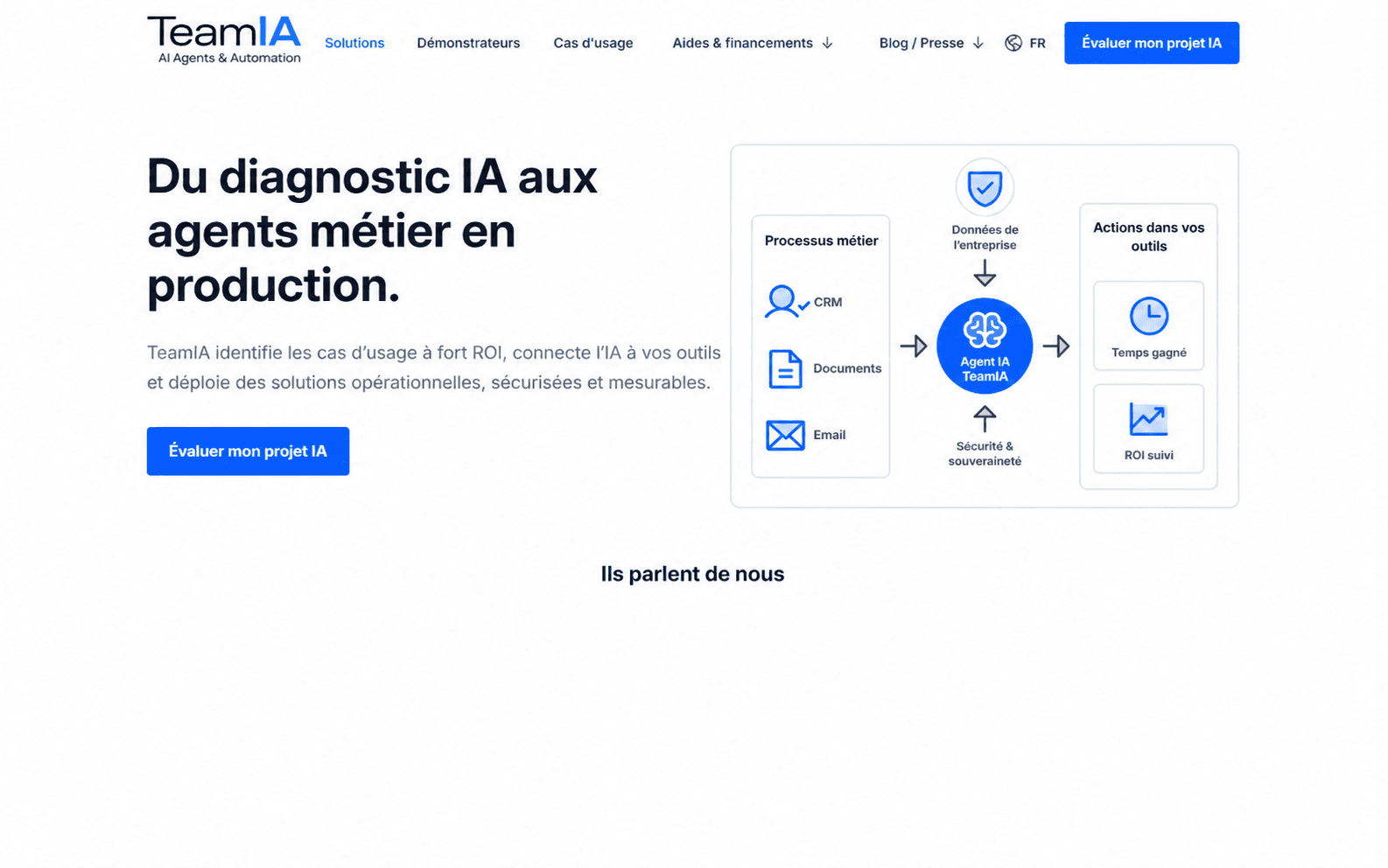
Generative AI for Businesses in Madagascar: Uses, Cost and Method
Generative AI is not a strategy by itself
Generative AI for businesses in Madagascar is attractive because it can write, summarize, translate, extract and converse. But giving every employee access to ChatGPT does not automatically create measurable value. Value appears when the model receives trusted context, works inside a clear process and produces an output that a person or system can verify.
GenAI describes models that produce text, images, audio, code or structured data. An AI agent goes further by using those capabilities to select and execute approved actions in business tools.
Generative AI, AI agents and automation
Generative AI transforms content: a document summary, email draft, translation, field extraction or proposed answer. An AI agent combines a model with tools, limited memory and rules. Classic automation applies stable rules and is more predictable when no interpretation is required.
Strong projects often combine all three: automation for rules, generative AI for understanding or writing, and agents only when tool selection is genuinely useful.
Seven practical business uses
Faster customer responses
AI summarizes the message, retrieves approved information and drafts an answer. Complaints, commitments and ambiguous situations remain with people.
Document processing
Quotes, invoices, contracts, forms and reports can be classified and transformed into structured data. Uncertain fields enter a review queue.
Internal knowledge access
A documentation assistant helps employees retrieve a procedure, product or rule. Answers should cite their source and respect access permissions.
Assisted prospecting
The model summarizes a company, classifies a need and prepares a response angle. The workflow preserves source, score and sales approval before contact.
Marketing preparation
AI can create a first draft from an offer, study or interview. Differentiation, evidence, tone and publication remain editorial decisions.
Software development
Coding agents such as Claude Code or Codex read repositories, prepare changes and run tests. They accelerate implementation but do not replace architecture, review or production responsibility.
Reporting
AI summarizes important changes after deterministic calculations produce the numbers. It explains the dashboard; it should not invent metrics.
Constraints to plan for in Madagascar
Real language
Employees and customers may mix French, Malagasy, English, abbreviations and spoken phrasing. Test sets need to reflect those conditions rather than perfect prompts.
Connectivity and devices
Public journeys must stay lightweight, mobile and tolerant of interruptions. A heavy demonstration is less useful than a simple tool that works in real conditions.
Fragmented data
Google Sheets, Gmail, Facebook and shared files often contain competing versions of the same information. Start by selecting the source of truth and permissions.
Variable costs
Cost depends on text volume, model choice, retrieval, integrations and monitoring. Running the largest model on every step is rarely optimal. Deterministic filters can reserve AI for cases that require it.
A 90-day method
Days 1 to 15: choose one bottleneck
Measure a frequent process: volume, handling time, errors, waiting and people involved. Select one outcome, such as reducing first-response time.
Days 16 to 35: prepare data and rules
Identify approved sources, excluded cases, human decisions and output format. Build a test set from real anonymized examples.
Days 36 to 60: build a bounded pilot
The pilot handles one journey, a limited tool set and human fallback. Outputs are logged and compared with the current process.
Days 61 to 75: evaluate
Measure time saved, quality, errors, cost and adoption. Failures become regression tests before expansion.
Days 76 to 90: scale gradually
Add access control, alerts, volume limits, backups and documentation. Increase traffic only after important cases pass validation.
What drives project cost?
Cost depends more on the process and integrations than on the model name. An assistant using an approved FAQ is simpler than an agent connected to CRM, documents, email and financial actions.
The complete budget includes discovery, data preparation, engineering, APIs, hosting, evaluations, security and maintenance. Starting with a measurable pilot protects the budget better than building a general platform before identifying the use case.
The TeamIA platform case study shows this approach across diagnosis, business agents, demos, local markets and measurement. For implementation, explore my AI agent development service in Madagascar.
Mistakes to avoid
- choosing a model before choosing the problem;
- sending sensitive data without mapping services;
- asking AI to calculate what a rule can guarantee;
- removing human approval too early;
- measuring prompts instead of business outcomes;
- deploying without logs, cost limits or a shutdown path.
FAQ
How is AI being used in Madagascar? Accessible use cases include support, documents, internal knowledge, assisted prospecting, marketing, software development and reporting. Priority depends on each organization's process and data.
Does an SME need to train its own model? Usually not. It can use an existing model and invest in data, rules, integrations and evaluations, which have a larger effect on system quality.
Can generative AI work with n8n? Yes. n8n prepares data, calls the model, validates output, triggers approved actions and records the result.
How should data be protected? Minimize information sent to models, choose services according to risk, restrict permissions, keep secrets on the server and document data flows.
Have a process in mind but not the right scope? Send me the bottleneck, tools and expected outcome.